Teresa Buey joins ICAC to complete her doctoral thesis with the ArPA-LIRA research group.
We are pleased to announce Teresa Buey‘s arrival at our center during this pivotal stage in her research career. Teresa joins us to complete her doctoral thesis, an innovative project focused on the use of colored ornamental stones as epigraphic supports in central and northern Hispania Citerior.
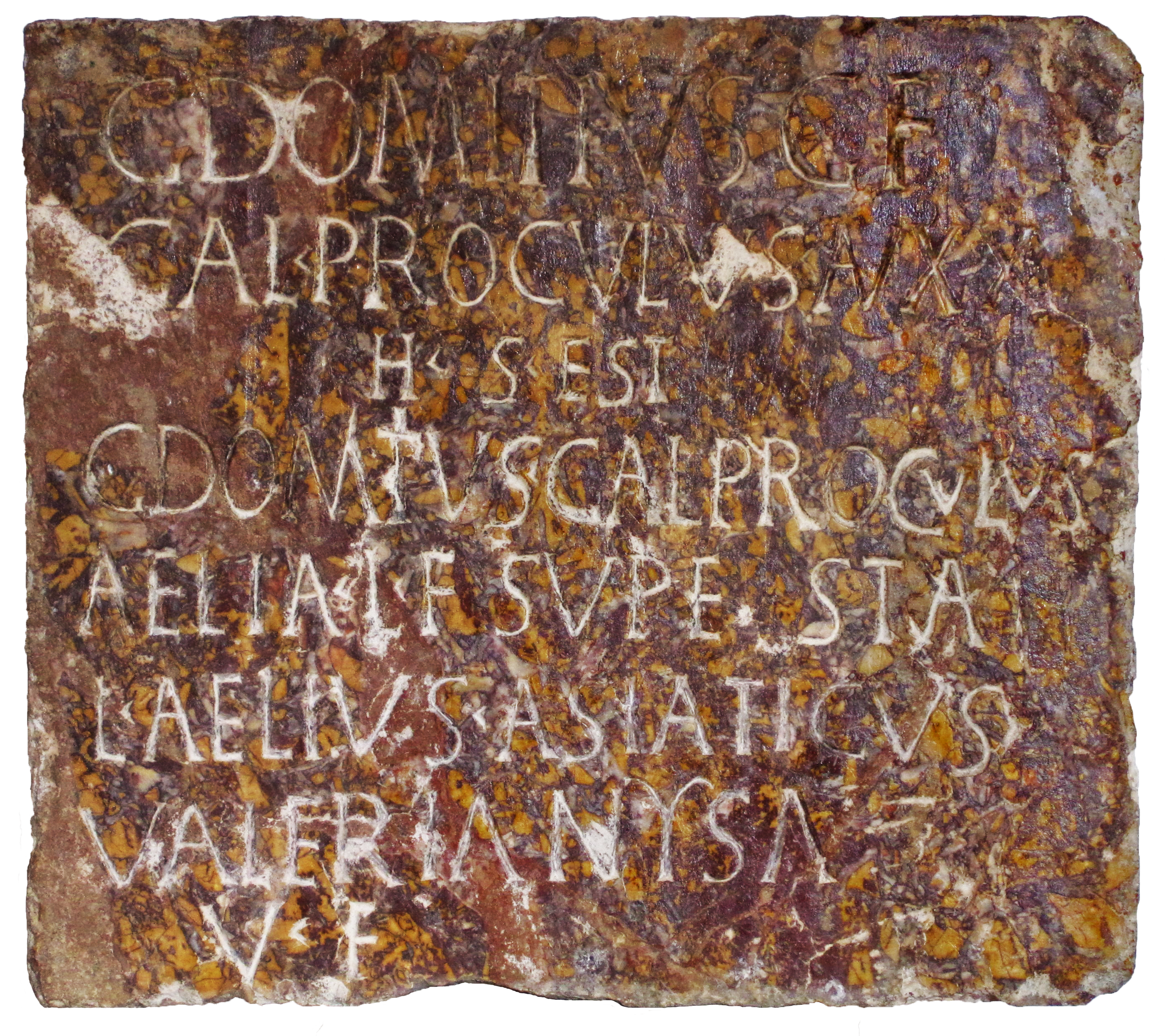
This research, which integrates archaeological and epigraphic methodologies, offers a fresh perspective on the use of colored marmora in Roman society, analyzing its symbolism, distribution, and role in conveying messages of power and prestige. The thesis, titled “Colored Marble as Epigraphic Support: Use, Distribution, and Symbolism in the Conventus Tarraconensis, Caesaraugustanus, and Cluniensis,” is poised to make significant contributions to the field.
A History graduate from the University of Zaragoza, Teresa pursued an inter-university master’s degree in Classical Archaeology (URV-UAB-ICAC) between 2017 and 2019. Her decision to move to Tarragona was driven by the program’s specialization in Roman archaeology, the opportunity for an Erasmus stay (which she completed in Rome), and the prospects offered by ICAC’s PIR Program (Introduction to Research Program).
During her master’s studies, she joined the PIR program and worked on her final thesis under the guidance of Dr. Diana Gorostidi (URV-ICAC). This work earned her the Maria Helena Maseras Award from the Rovira i Virgili University (dedicated to promoting gender perspectives and studies in education and research) and culminated in the publication of the book De svo dedit: Women and the Promotion of Honorific Monuments in Tarraco. This study explored the role of women as patrons of honorific pedestals in Imperial Tarraco—a remarkable achievement!
During her master’s studies, she joined the PIR program and worked on her final thesis under the guidance of Dr. Diana Gorostidi (URV-ICAC). This work earned her the Maria Helena Maseras Award from the Rovira i Virgili University (dedicated to promoting gender perspectives and studies in education and research) and culminated in the publication of the book De svo dedit: Dones i promoció de monuments honorífics a Tàrraco. This study explored the role of women as patrons of honorific pedestals in Imperial Tarraco—a remarkable achievement!
The book De svo dedit is the product of a mature phase in gender studies in ancient Rome, as well as epigraphic research in Tarraco. It will likely be considered one of the most notable contributions to the study of Roman women in Hispania.” – Diana Gorostidi.
After completing her master’s, Teresa Buey worked as a professional archaeologist, participating in excavations at iconic sites such as the Roman city of Segovia. In 2021, she received an FI Grant (Training of Research Personnel) from the Government of Catalonia, allowing her to make significant progress on her doctoral project, to which she has been fully dedicated since this year under a research contract at ICAC.
Teresa combines a thorough bibliographic and graphic review with epigraphic autopsy work (direct analysis of pieces in situ) in museums and collections.
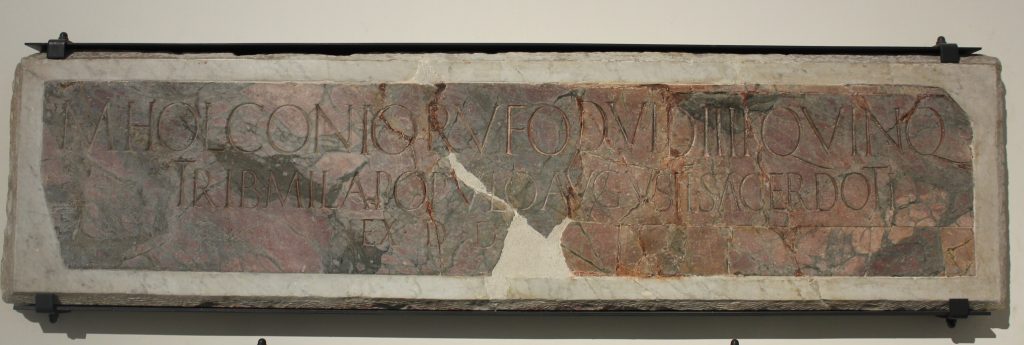
Her thesis focuses on coloured ornamental stones used as epigraphic supports. While studies on stone materials have gained prominence recently, their use as support for inscriptions remains an emerging field. Her goal is to create a novel catalogue that identifies the origin of the materials, establishes usage chronologies, and analyzes their archaeological and socio-economic contexts.
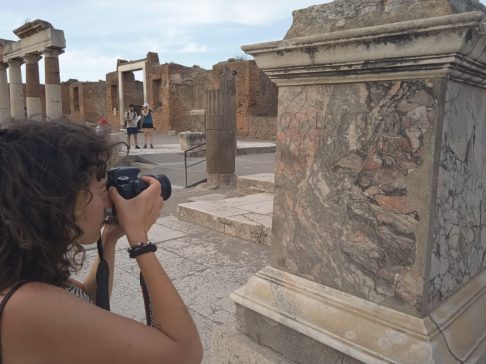
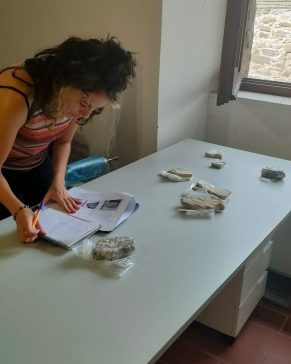
The project also explores how the use of coloured marmora reinforced epigraphic messages. These luxurious materials symbolized power and wealth and stood out for their visual impact. To strengthen her findings, Teresa has also visited collections in Italy (including Pompeii and cities in Umbria) to compare the use of these materials in the Italian Peninsula and Hispania. This has deepened her understanding of trade connexions, usage patterns, and cultural influences between the two regions.
At ICAC, Teresa is part of the ArPA-LIRA research group (Archaeology of Artistic, Literary, and Iconographic Productions and Their Reception from Antiquity to the Present, 2021 SGR 01365), with whom she has already collaborated on several projects, including the SULMARE project led by Diana Gorostidi (URV-ICAC). These collaborations have enriched her perspective and strengthened the interdisciplinary nature of her work.
With her experience, dedication, and innovative approach, we are confident that Teresa will make an outstanding contribution to epigraphic studies and ICAC’s research. Welcome to the team!
About the Catalan Institute of Classical Archaeology (ICAC)
The Catalan Institute of Classical Archaeology (ICAC-CERCA) is a CERCA center established as a consortium in 2003 by the Government of Catalonia and the Rovira i Virgili University. It is a Catalan institution with an international scope, at the forefront of research and conservation of archaeological heritage. Its headquarters are in Tarragona, a city recognized as a UNESCO World Heritage Site in 2000. Its researchers work to understand the past, through the study of archaeological remains, and promote the preservation of the historical legacy. We are CERCA!
For more information, visit www.icac.cat.