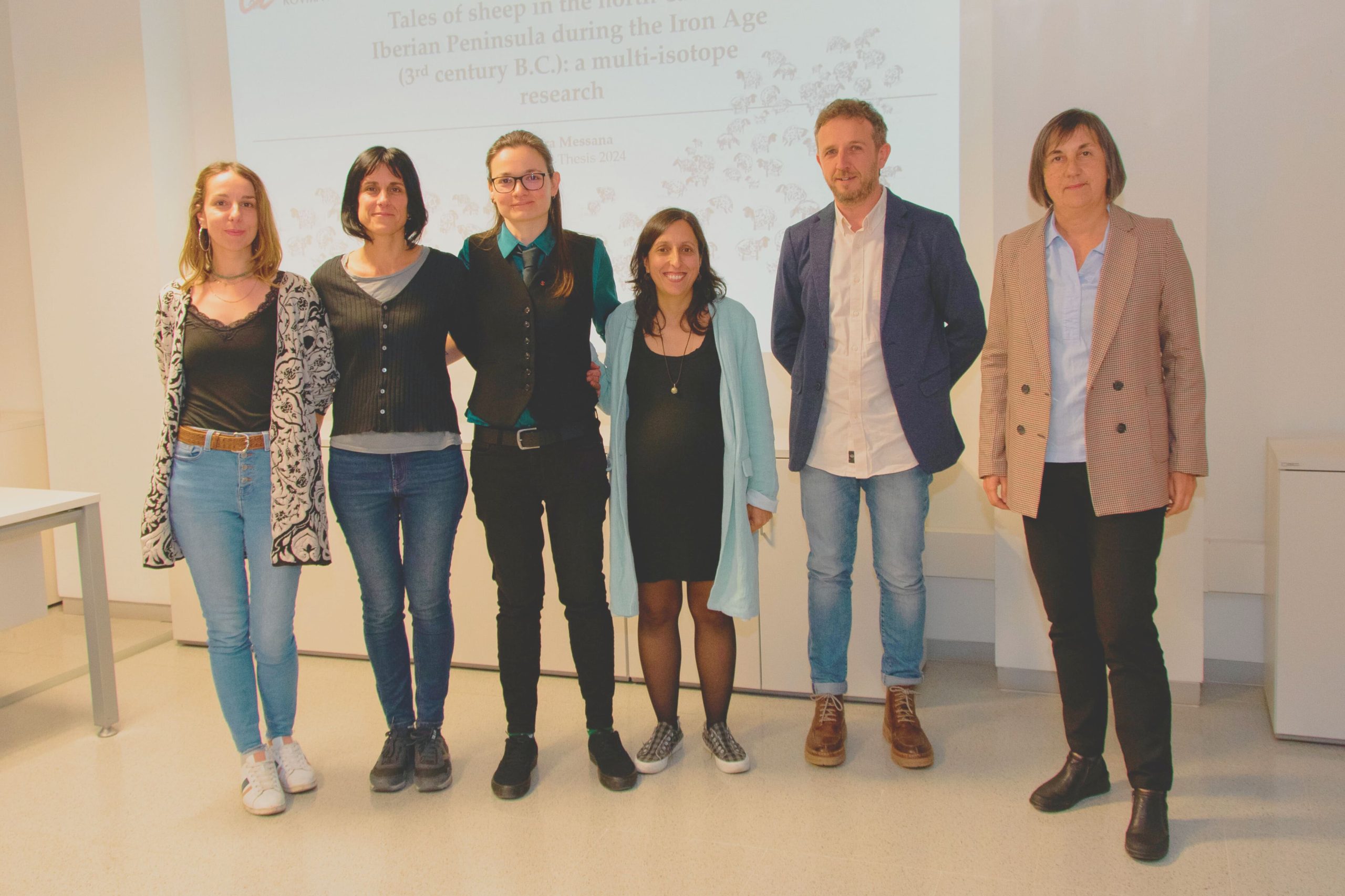
Chiara Messana defended her doctoral thesis on the characterization of livestock practices by Iberian communities during the Iron Age.
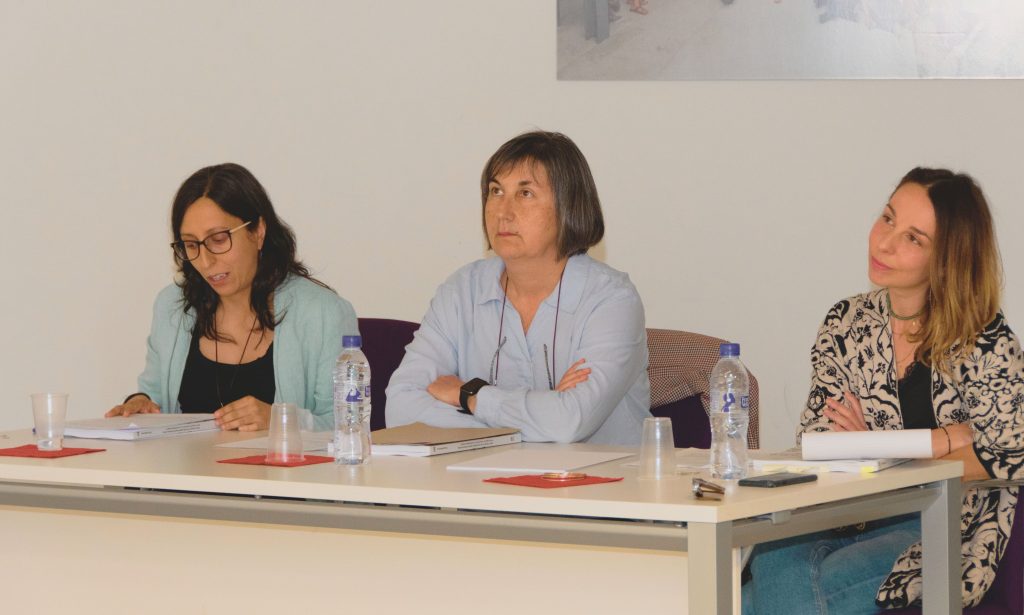
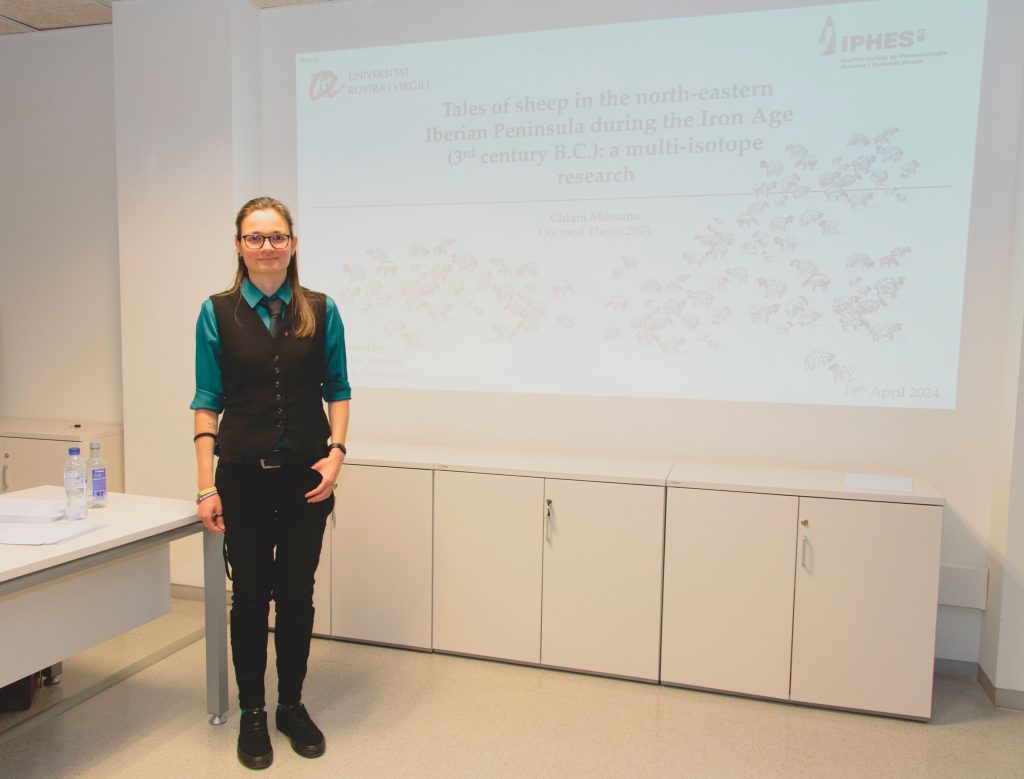
On Friday, April 19, 2024, in the Abric Romaní room at IPHES-CERCA and within the framework of the Doctoral Program in Quaternary and Prehistory of the Universitat Rovira i Virgili, the defense of the doctoral thesis “Tales of Sheep in the north-eastern Iberian Peninsula during the Iron Age (3rd century BC): a multi-isotope research” by Chiara Messana took place.
The thesis, co-directed by Dr. Carles Tornero, a researcher at the Universitat Autònoma de Barcelona and IPHES-CERCA, and by Dr. Lídia Colominas, a researcher at the Catalan Institute of Classical Archaeology (ICAC-CERCA), was defended before the tribunal composed by Dr. M. Carme Belarte (ICREA-ICAC-IEC), Dr. Juliette Knockaert (Aix-Marseille Université), and Dr. Patricia Martín (IPHES-CERCA).
The study focused on livestock management during the Iron Age and among the Iberian communities of the northeastern Iberian Peninsula, as there had been insufficient data and information until now. These societies relied on cereal agriculture and livestock for their subsistence, especially sheep. This species was predominant due to its adaptability to the climate, topography, and Mediterranean environment, as well as the wide range of products it provided.
Messana’s doctoral thesis employed a biogeochemical approach (stable isotopes) to gain a new and comprehensive understanding of livestock management strategies adopted at four relevant sites in present-day Catalonia, dated to the 3rd century BC: Mas Castellar de Pontós, Tossal de Baltarga, Sant Esteve d’Olius, and Turó de la Rovira.
The use of multi-isotopic analysis has enabled the investigation, with direct evidence and seasonal resolution, of the three fundamental aspects of each livestock system: reproduction patterns, mobility strategies, and dietary habits of sheep.
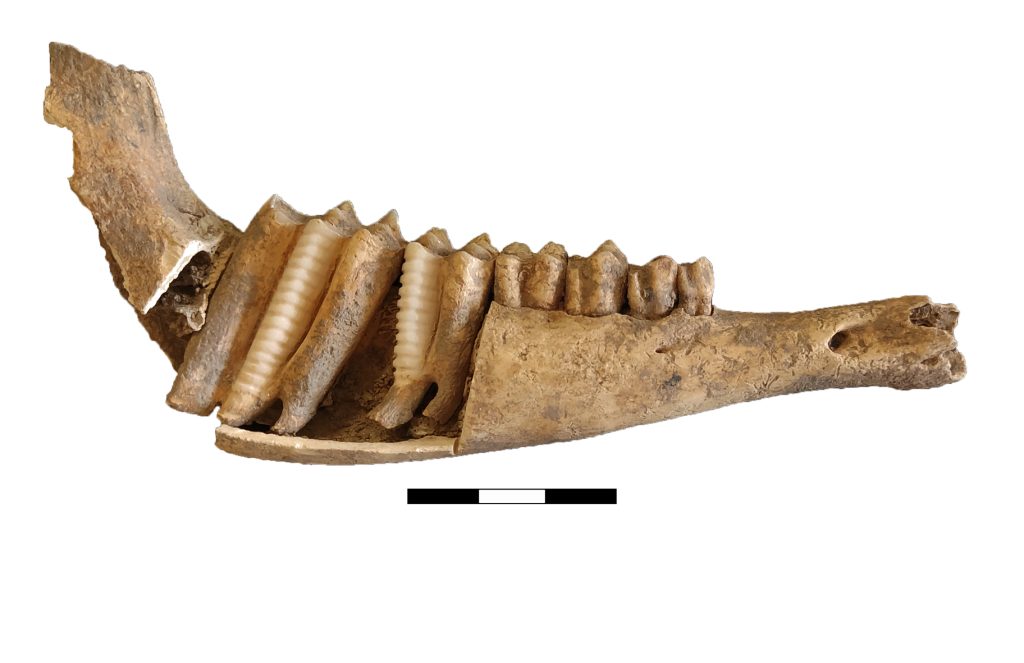
Firstly, sequential analyses of the oxygen isotopic values (δ18O) in the second and third molars of sheep have revealed various reproduction patterns, with anthropogenic manipulation of both the season and the duration of the birthing period.
Secondly, the combination of sequential analyses of δ18O and carbon (δ13C) values with the isotopic ratios of strontium (87Sr/86Sr) in the dental enamel of sheep has revealed herd movements in different altitudinal and geological areas. However, herd mobility was not widespread. Additionally, the first evidence of the downward mobility of herds from the Pyrenees to the lowlands has been recorded, suggesting an image of a more integrated and connected Ibero-Pyrenean world than previously recognized.
En general, este estudio multiisotópico marca un paso decisivo en la caracterización y comprensión de las prácticas ganaderas ovinas adoptadas por las comunidades íberas de la Edad del Hierro. Los resultados muestran una ganadería autosuficiente en cada uno de los cuatro asentamientos. Sin embargo, la ganadería era compleja a escala local. De hecho, cada comunidad elegía las estrategias que adoptar en función de las necesidades específicas del asentamiento, considerando los productos a explotar, las condiciones ambientales, las necesidades económicas y las decisiones políticas.
Estos excelentes resultados forman parte de la investigación interdisciplinaria entre los equipos de los centros IPHES-CERCA, ICAC-CERCA y la UAB, que han sabido combinar su experiencia y capacidad de análisis para lograr mejores resultados. A finales de 2023, pudimos ver un éxito notable de esta colaboración, con la publicación de un estudio en la revista Frontiers in Environmental Archaeology que demostraba que las comunidades íberas de Cataluña practicaban movimientos altitudinales estacionales: Las raíces de la trashumancia tienen 2.500 años de antigüedad.
About the Catalan Institute of Classical Archaeology (ICAC-CERCA)
The Catalan Institute of Classical Archaeology (ICAC-CERCA) is a CERCA center established as a consortium in 2003 by the Government of Catalonia and the Rovira i Virgili University. It is a Catalan institution with an international scope, at the forefront of research and conservation of archaeological heritage. Its headquarters are located in Tarragona, a city recognized as a UNESCO World Heritage Site in the year 2000. Its researchers work to understand the past through the study of archaeological remains and promote the preservation of the historical legacy. We are CERCA!
For more information, visit www.icac.cat.

Related News:
Chiara Messana defensa la seva Tesi Doctoral sobre la caracterització de les pràctiques ramaderes per part de les comunitats ibèriques durant l’Edat del Ferro, IPHES-CERCA, 19 d’abril de 2024.
Un estudio confirma que la trashumancia lleva 2.500 años en Cataluña, La Vanguardia, 13 d’octubre de 2023.
Un estudio de población ibérica de Catalunya sitúa “las raíces de la transhumancia” hace 2.500 años, Europa Press, 13 d’octubre de 2023.
Les arrels de la transhumància a Catalunya se situen fa 2.500 anys, Catalunya Press, 13 d’octubre de 2023.
Un estudi determina que fa 2.500 anys que a Catalunya es practica la transhumància, La Mañana, 13 d’octubre de 2023.